INTUNE
Multimodal in-car music browsing for future vehicles
In collaboration with

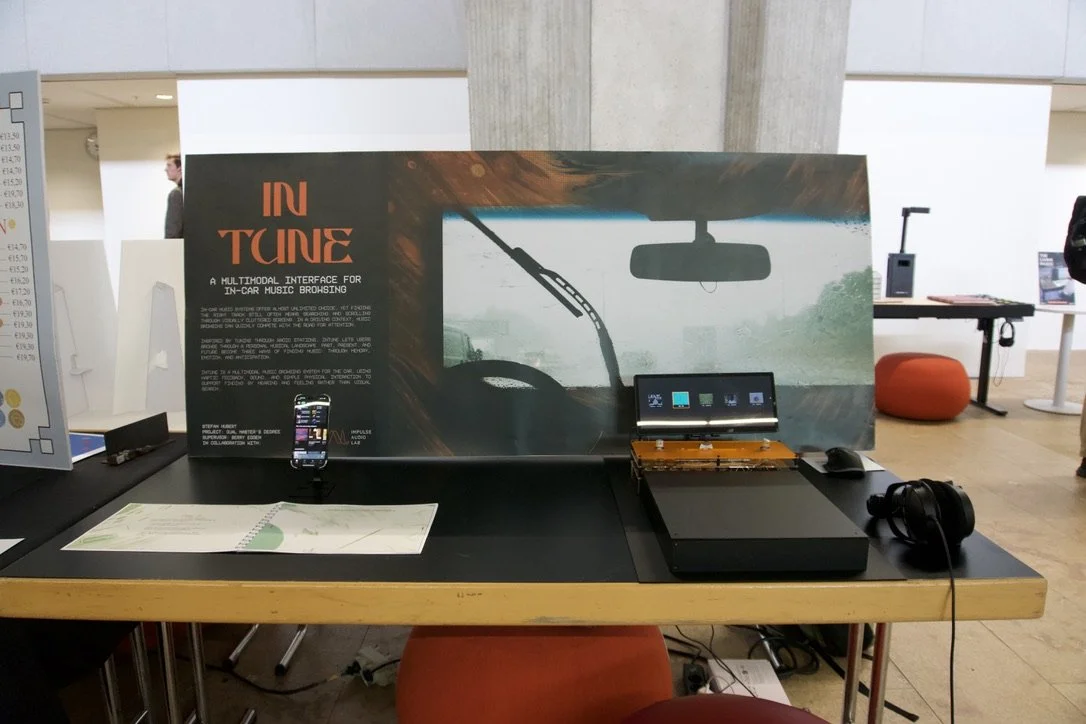
INTUNE
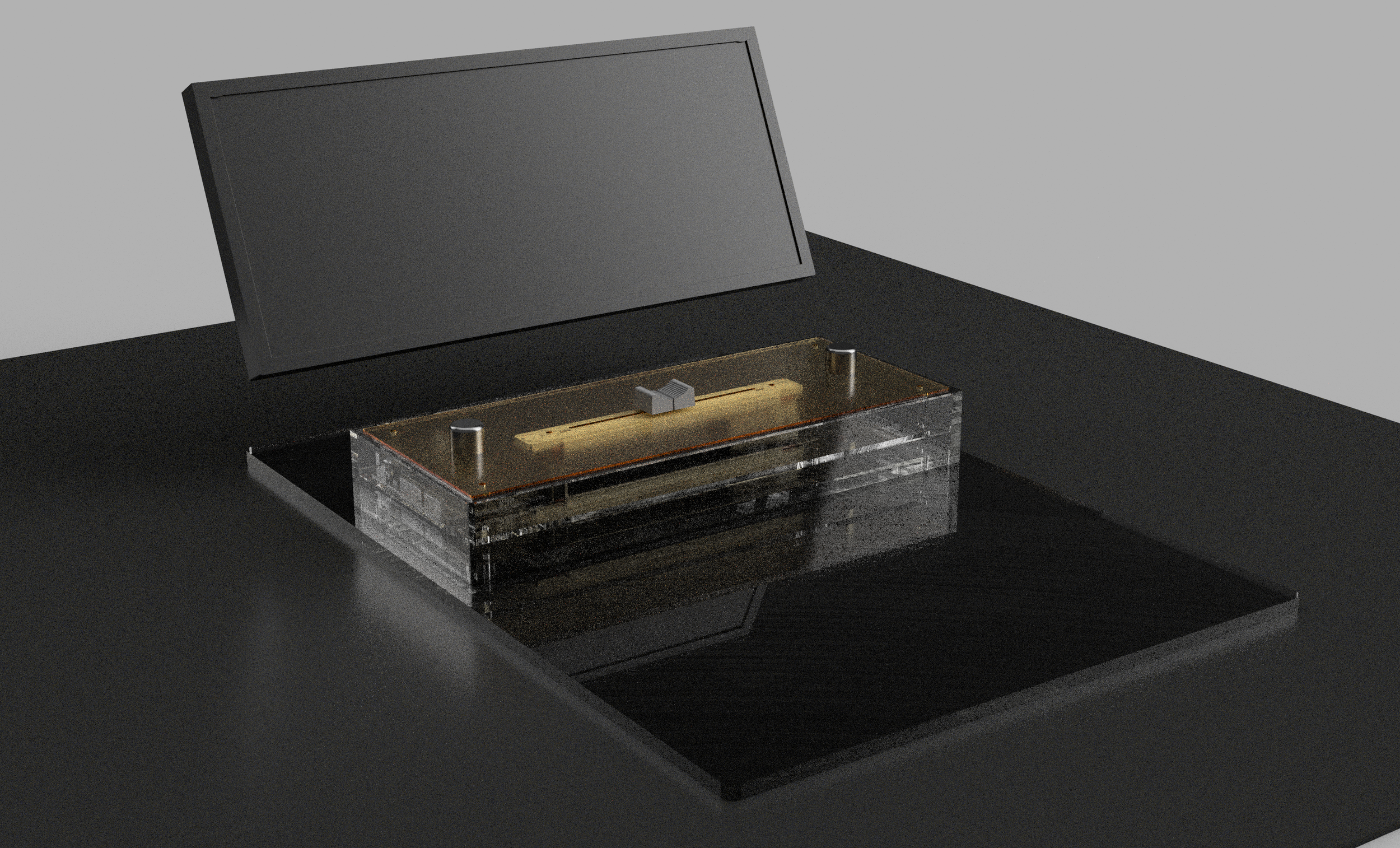
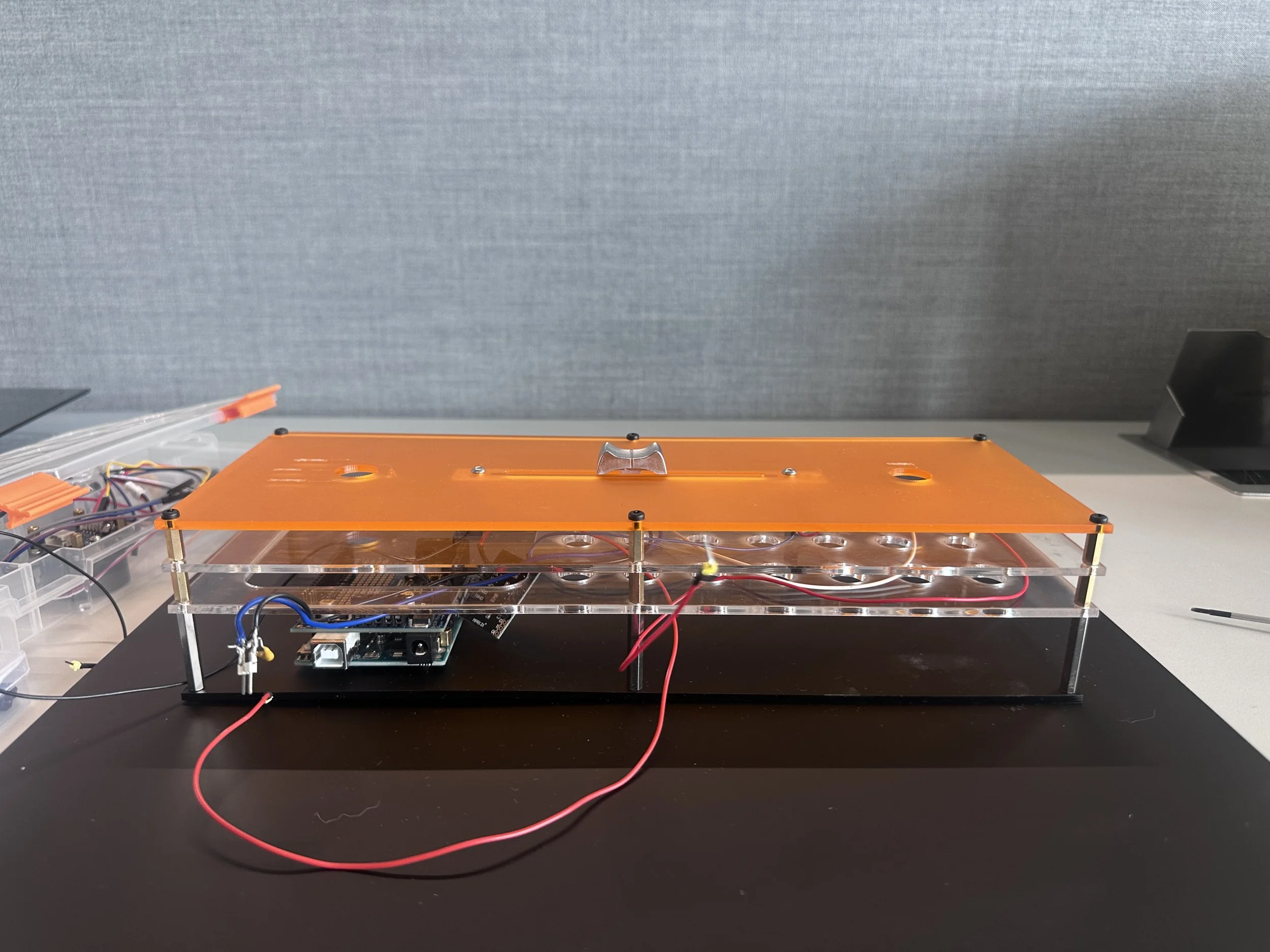
INTUNE lets drivers browse music through a force feedback fader, audio previews and haptic feedback. Instead of typing, scrolling or searching visually.
Users move through music first by feeling mood categories, then hearing short previews in that category, and finally committing to full playback.
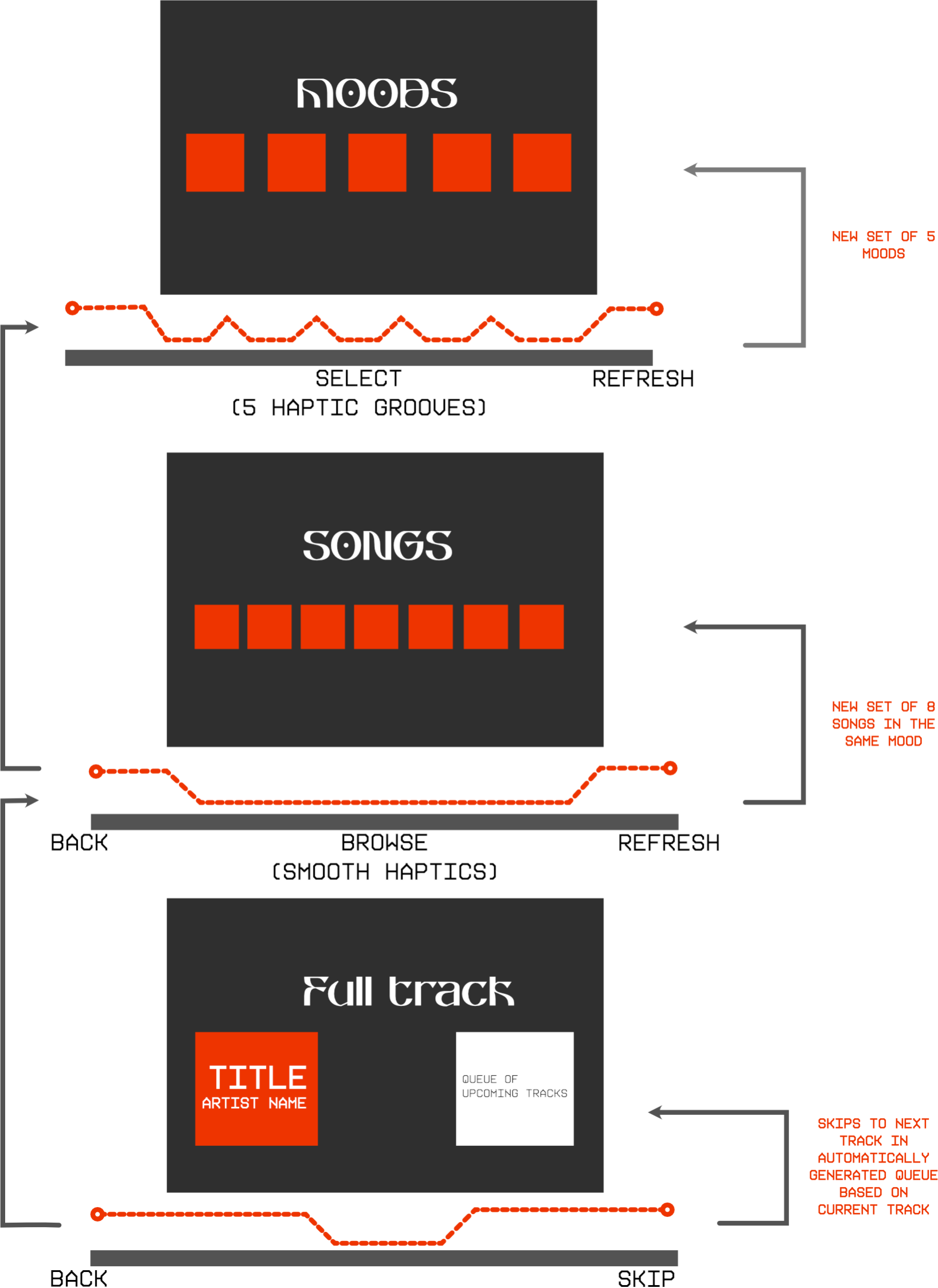
The interface is built around one control, four gestures, and three layers.
LAYER 1: MOODS
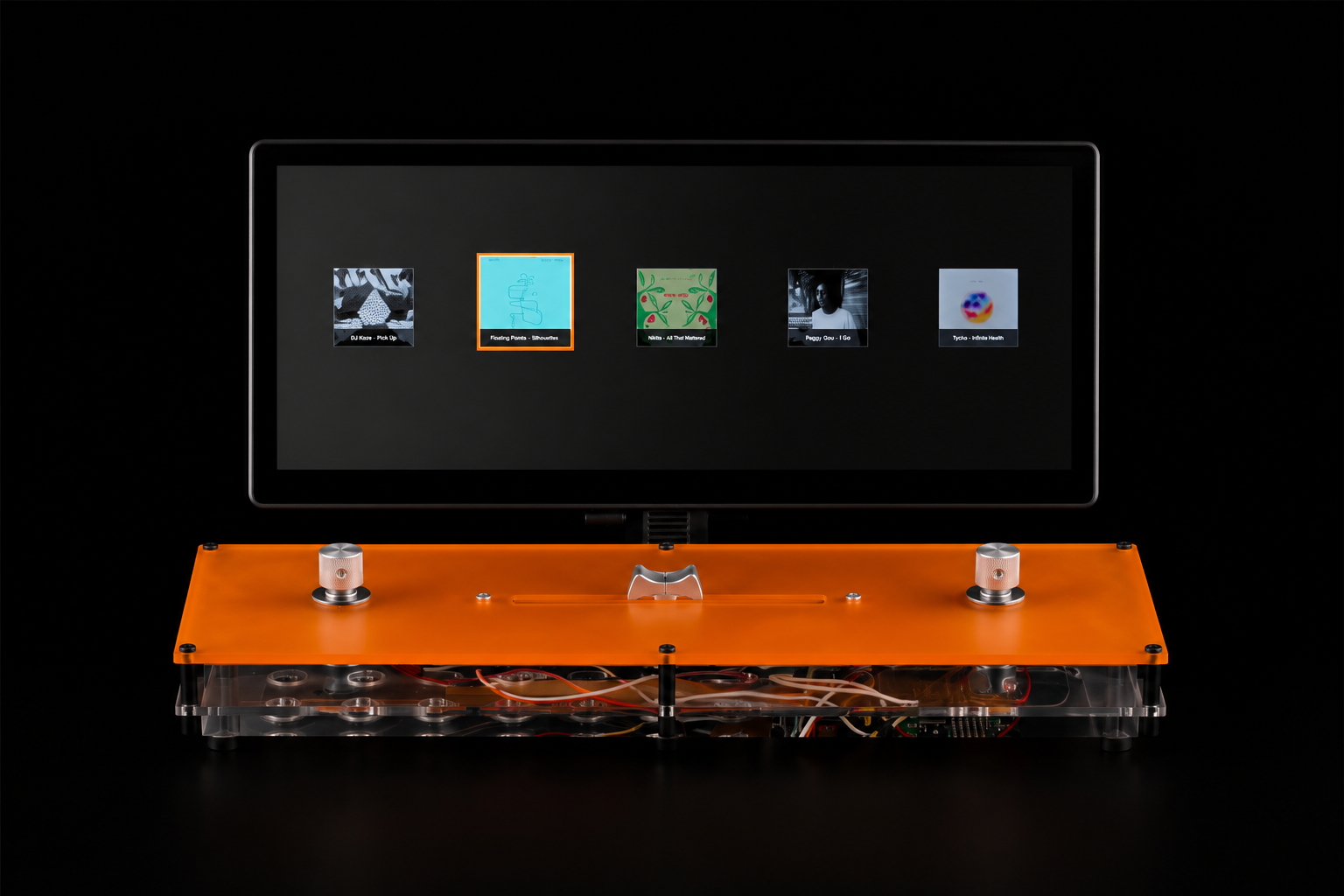
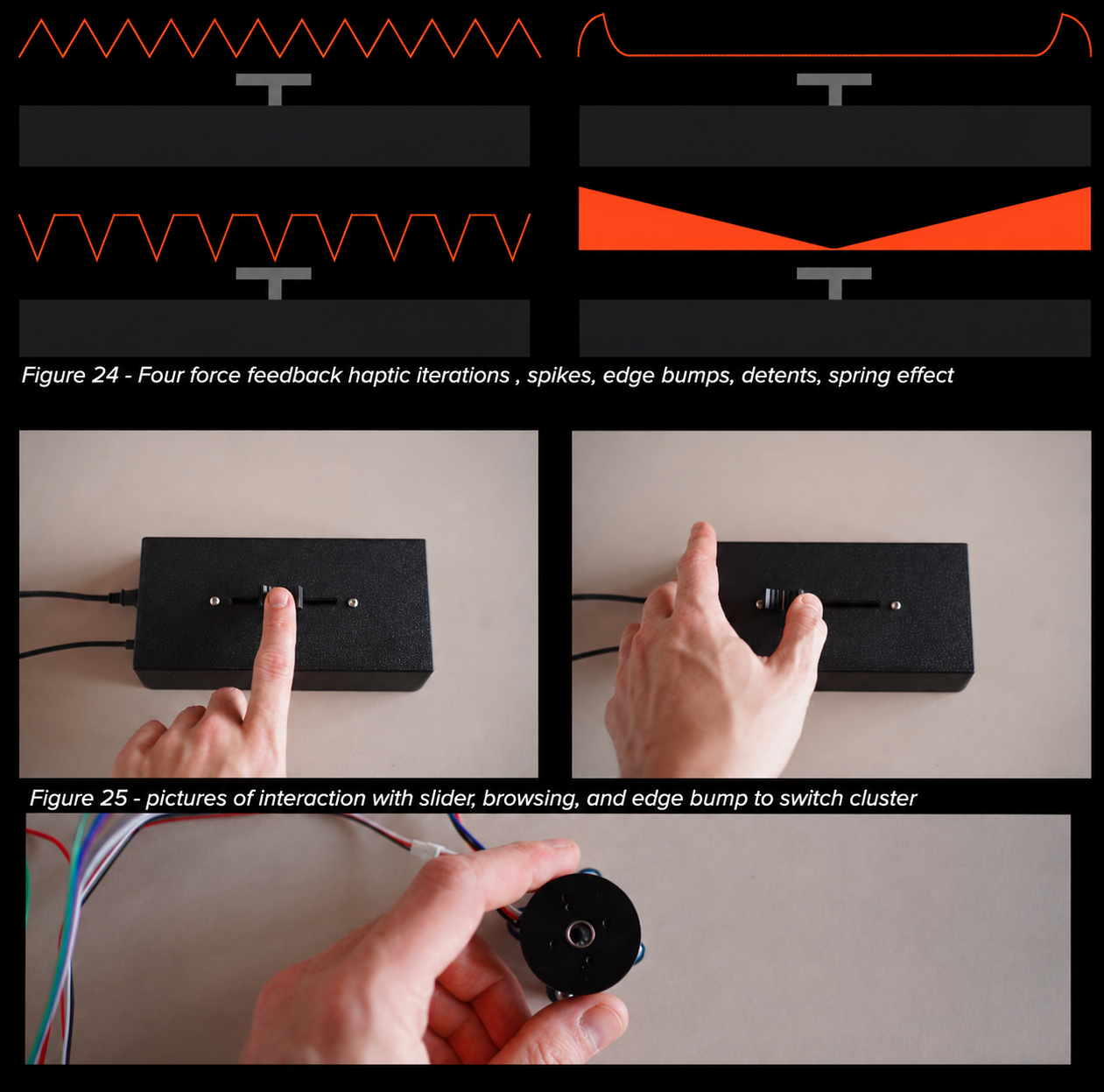
The first layer gives a broad overview of the listener’s library through five mood positions, ordered from calm to energetic.
Each position has a haptic detent and previews a representative track, so the driver can choose a direction by feeling and listening instead of reading.
LAYER 2: SONGS
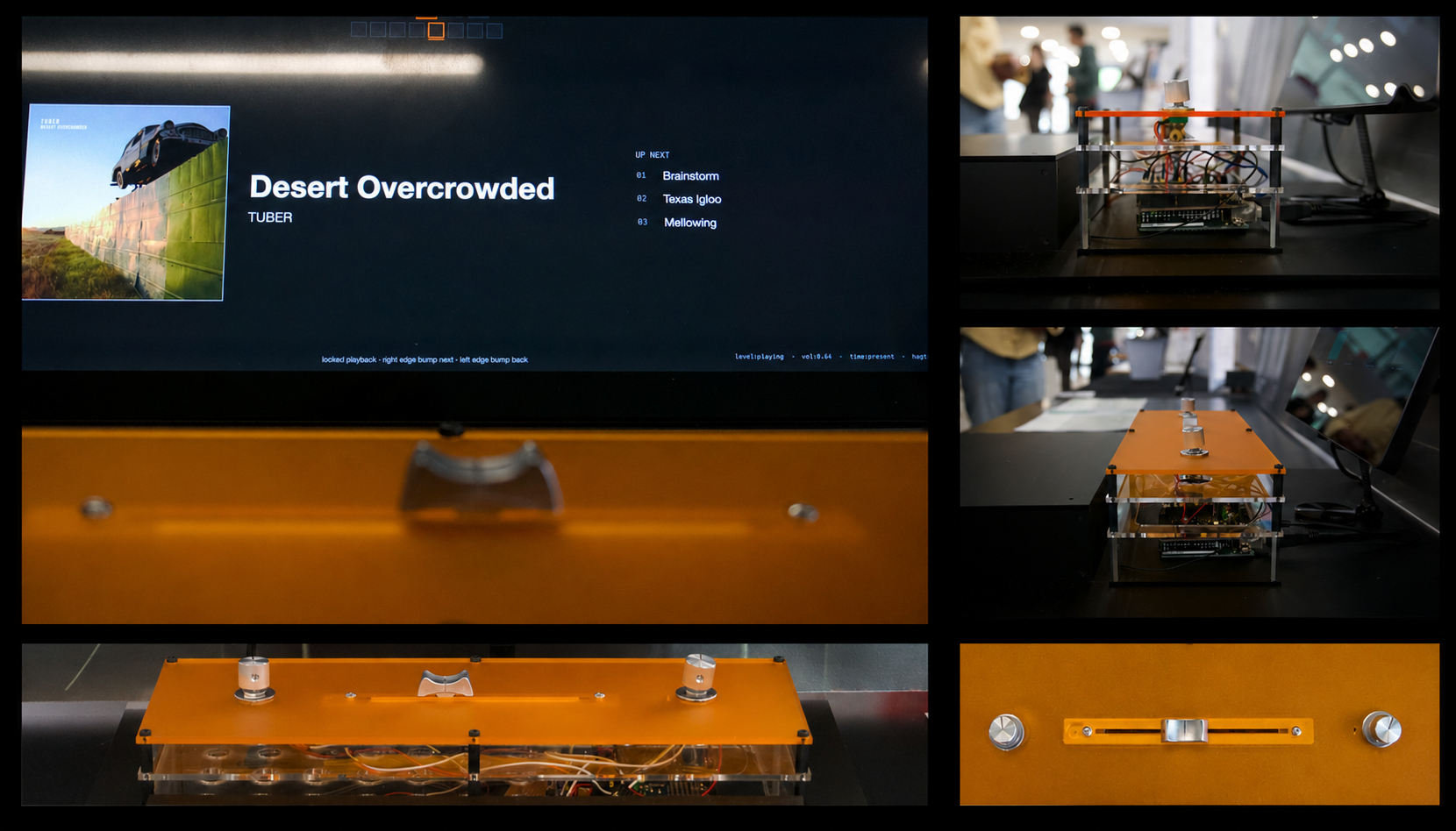
After choosing a mood, the fader becomes smooth and lets the driver scrub through eight short track previews.
Push right for a fresh set, push left to go back, or tap to start full playback.
LAYER 3: PLAYBACK
Once a track is selected, it plays in full and InTune generates a queue of similar music.
The fader becomes a simple playback control: push right to skip, or push left to return to browsing.
Full interaction grammer
Slide
Browse through music.
Tap
Select the current option.
Push left
Go one step back.
Push right
Refresh the selection or skip the current track.
Music Pipeline Algorithm
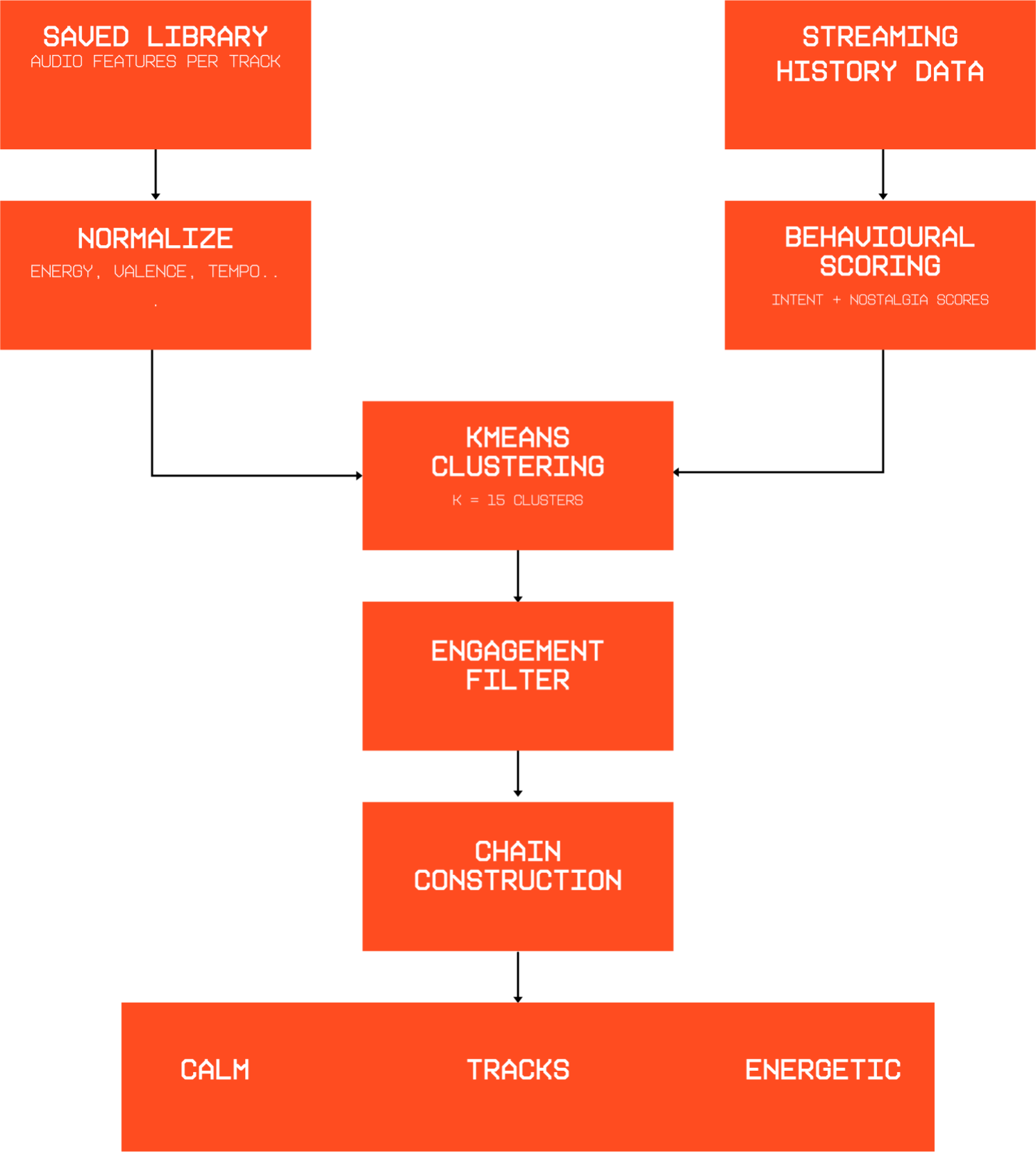
InTune works because the music underneath the fader is prepared before browsing starts.
The pipeline uses the listener’s own SPOTIFY library, listening history and audio features to create a small personal music space.
How it works
1. Analyse the library
Tracks are read from the user’s saved Spotify music and listening history.
2. Group by mood
Songs are clustered using audio features such as energy, valence, tempo and acousticness in a KMEANS algorithm.
3. Filter for relevance
Tracks with little personal listening history are pushed back, so the system surfaces music the listener actually knows.
4. Order for browsing
Each mood cluster is arranged from calm to energetic, matching the movement of the fader.
5. Preview and queue
A representative track introduces each mood. After selection, similar tracks form the playback queue.
Design Principle
The algorithm does not decide what the driver should hear.
It prepares a meaningful space, so the driver can recognise what feels right by listening.
PROCESS
Impulse Audio Lab combines sound design and software development to realize new sound experiences in the automotive industry.
For my thesis, the company wanted to expand into the automotive music sector.
The starting question was not what new technologies could achieve, but what people actually need and want when interacting with music behind the wheel.

Understanding the Problem
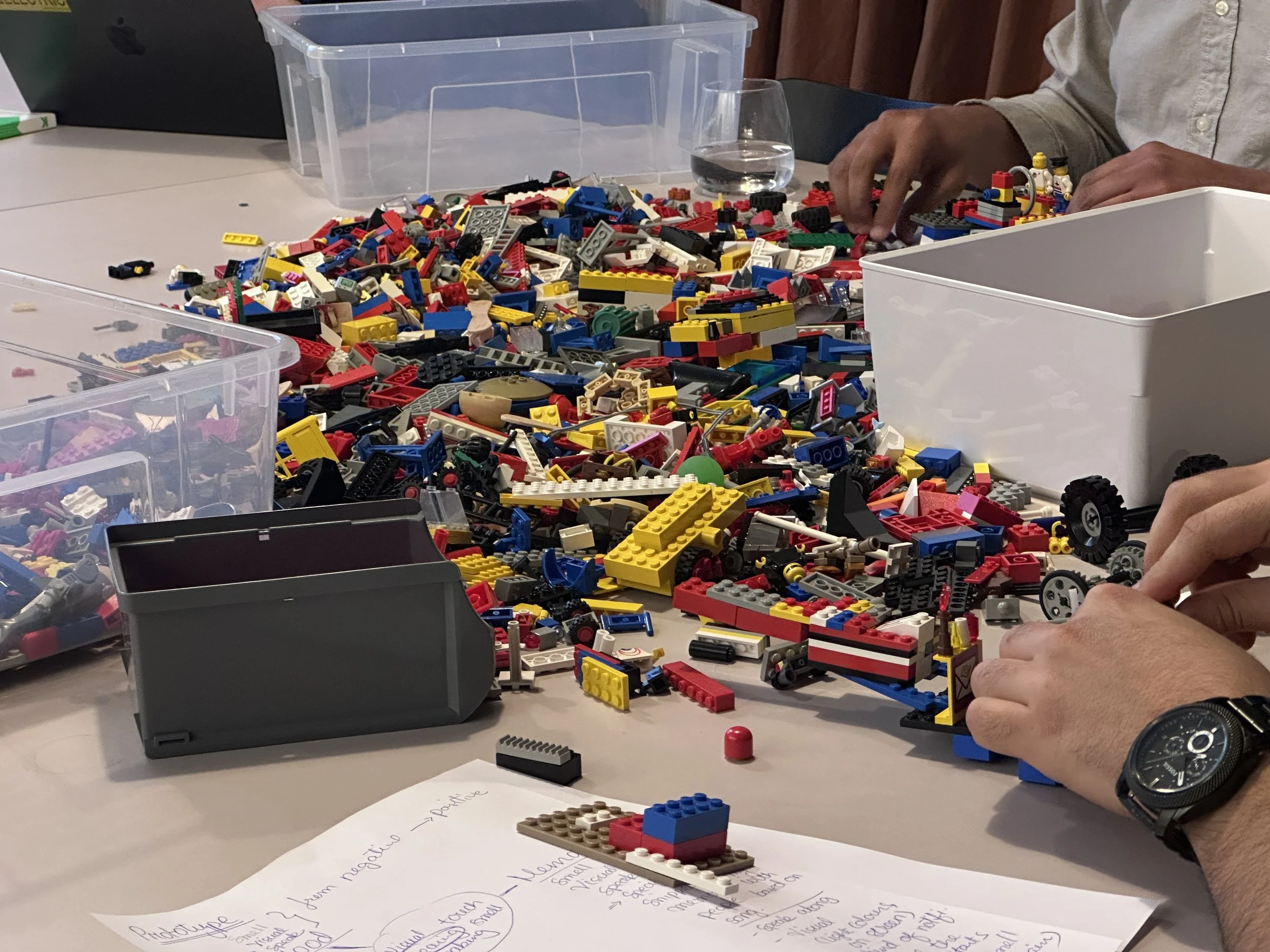
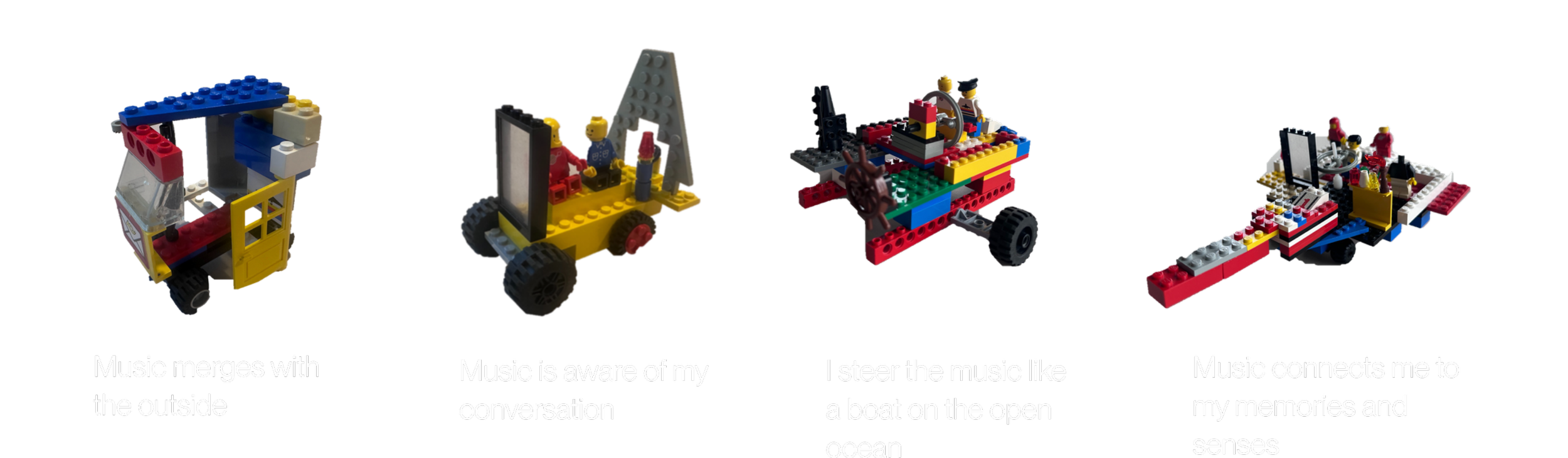
Through context mapping, cultural probes, and generative workshops, I explored how people relate to music while driving, what makes current systems frustrating, and where new interaction and experience opportunities could emerge.
INSIGHTS
People often do not know what music they want to listen to when they get in the car
People mentally travel through time using music while in the car
Reminiscing of the past using nostalgia
Grounding their emotions in the present
Using music to prepare for their destination in the future
Current music systems are built around visual search and explicit choice. But in the car, music selection is often emotional, situational, and hard to put into words
ALTER THE MUSIC
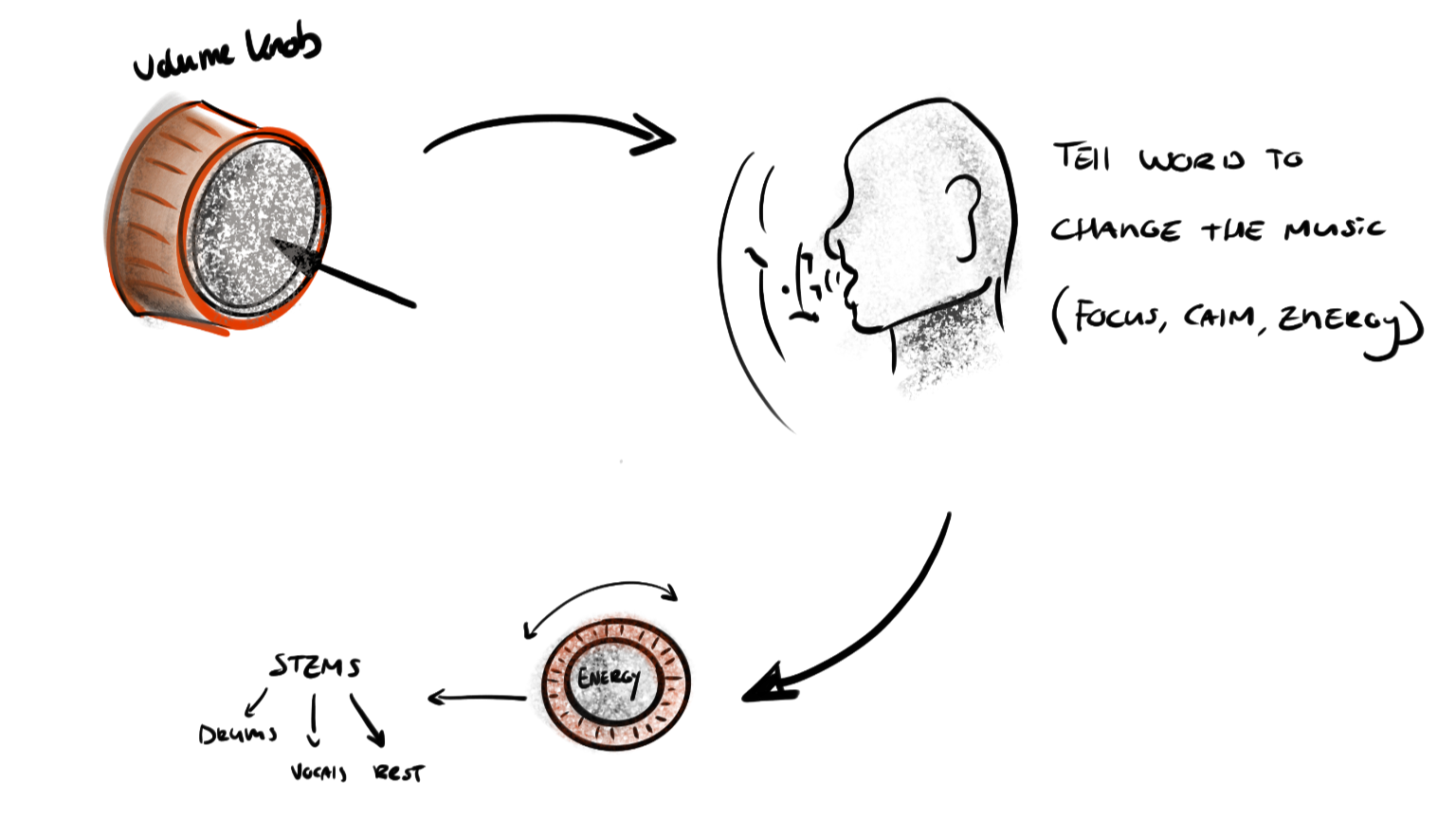
The first prototype explored whether drivers could adapt music to make room for conversation or more cognitive load while driving.
Instead of letting the car infer the social context automatically, a single control shifted the playing track into calmer, less intrusive forms by adjusting vocals, drums and instrumental layers using Ableton Live.
Learning
The interaction gave the driver agency, but it also changed the artist’s original work. This revealed a stronger design question: not how to alter music, but how to help people choose the right music.
GENERATE THE MUSIC FOR THE DRIVE
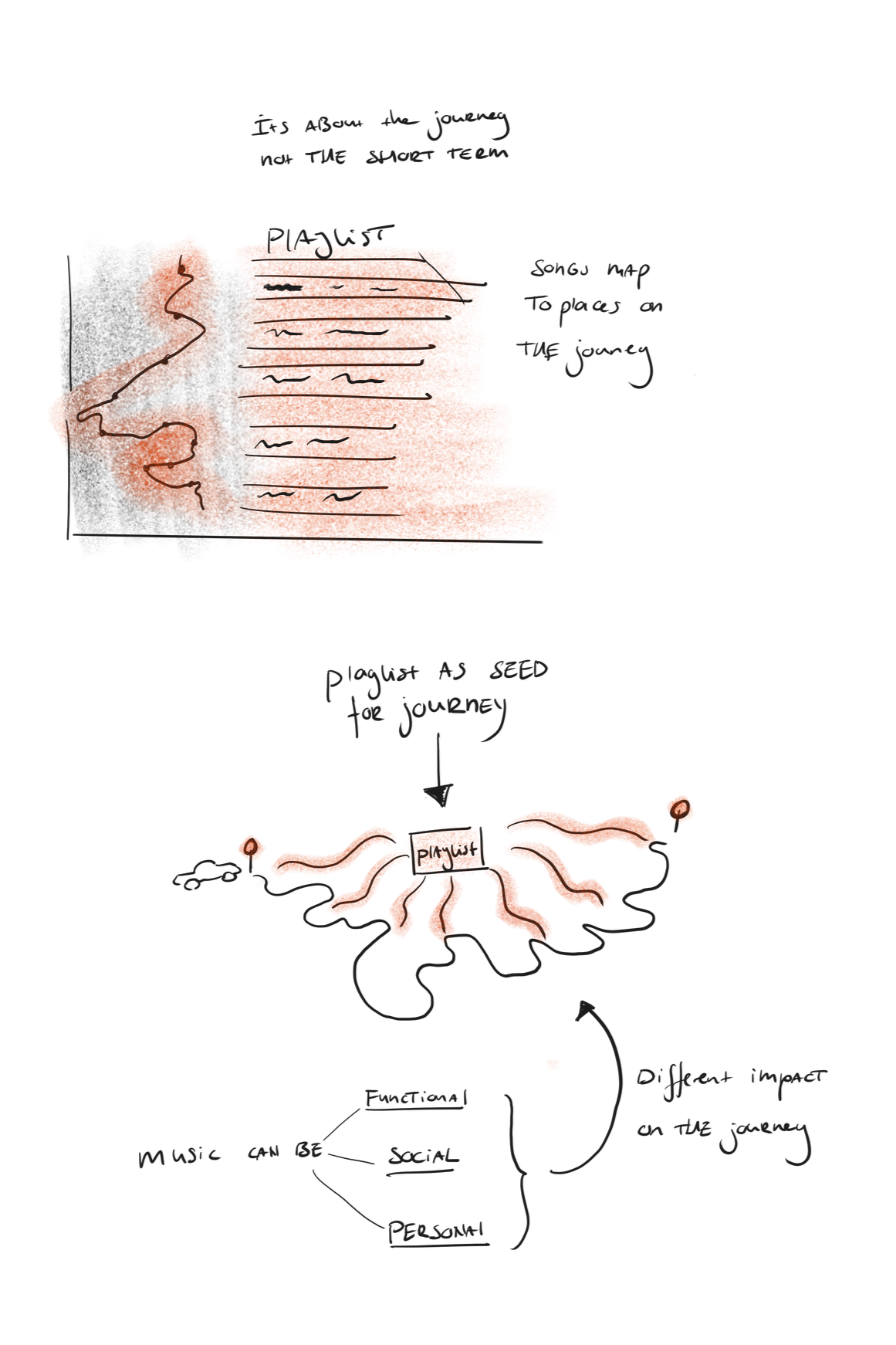
The second prototype tackled music selection directly. The driver spoke a destination and described what kind of music they wanted to hear, after which the system generated a playlist for the route based on their prompt and drive duration.
Learning
The interaction was flexible, but too dependent on words. People often struggled to describe music in advance, and wrong suggestions were hard to steer without starting over. It also returned unfamiliar catalogue music, while the research showed that meaningful in-car music often comes from the listener’s own library.
Shift
The next direction kept the listener’s library and the artist’s work intact, while making the space between them easier to browse.
EYES FREE MUSIC SELECTION
The first two prototypes, altering the music, and generating music for the route showed what the system should not do. The final direction became clearer: keep the listener’s own library, keep the artist’s work intact, and make the space between them easier to move through. This sparked a question:

In an environment that needs our full attention, why do we choose music visually by reading and looking at album art, instead of listening to the music?
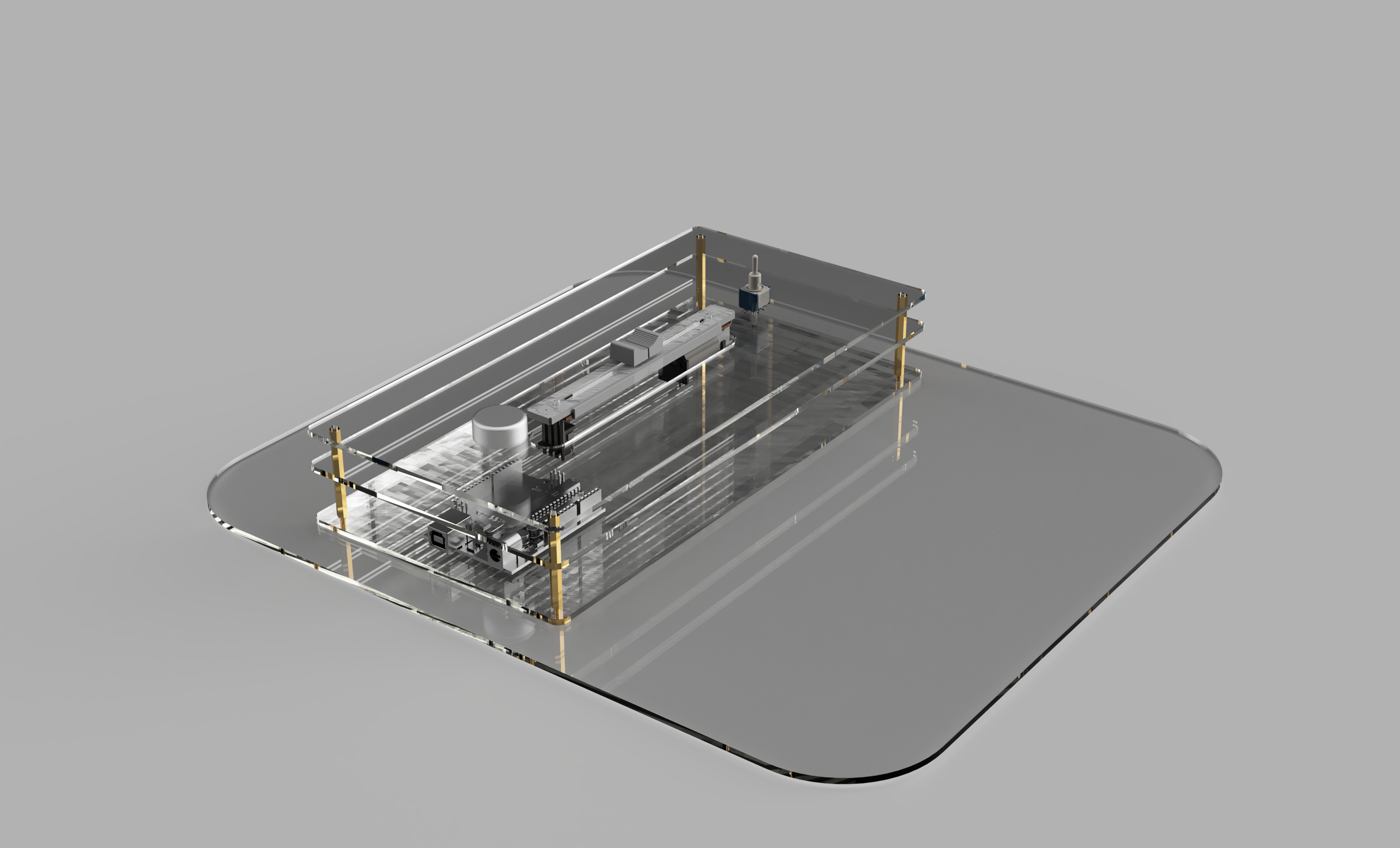
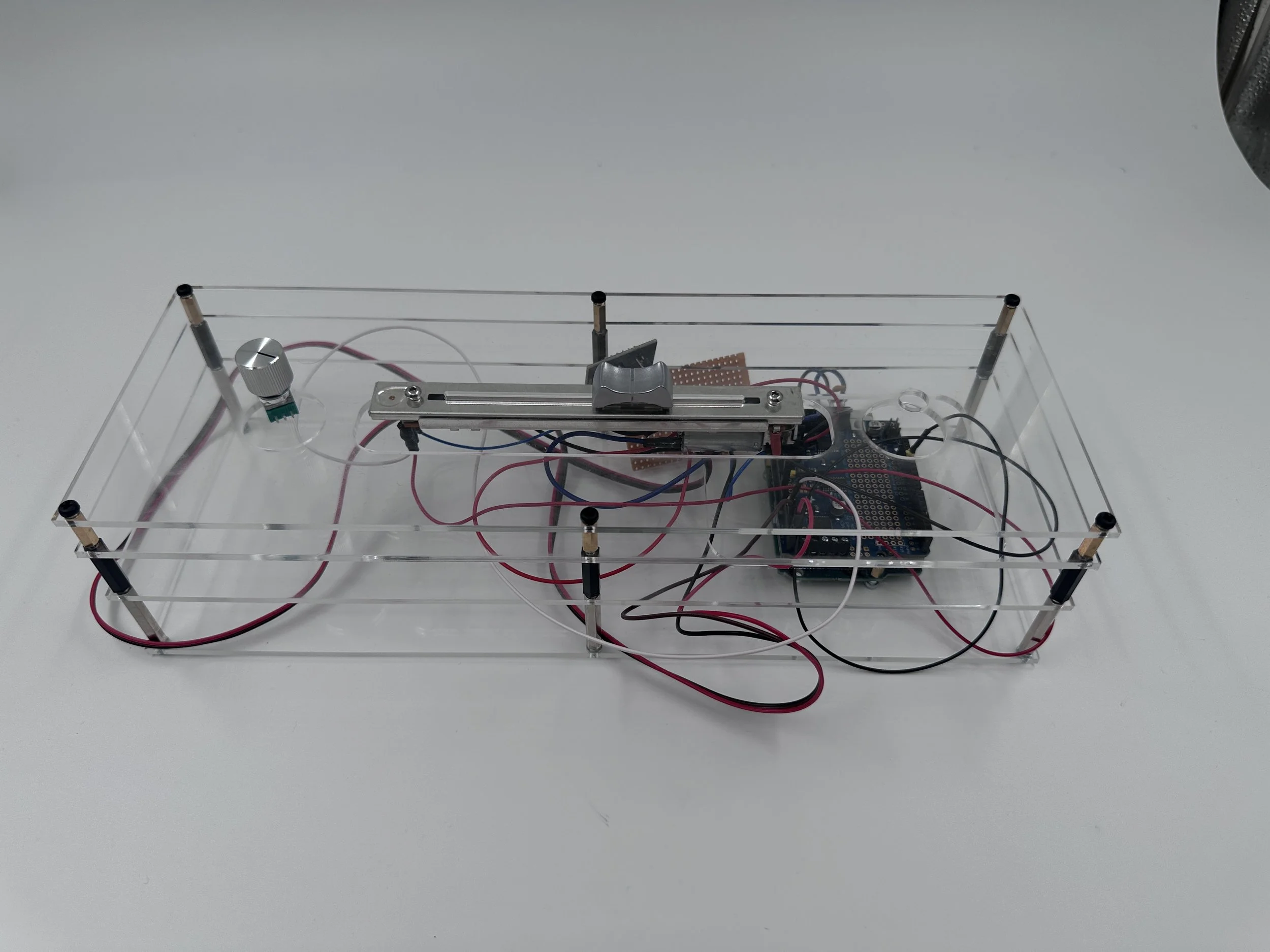
PHYSICAL FADER
The concept felt right, however the touch screen interaction was unable to anchor the placement of the hand while driving. People could not remember where they were on the fader, and where to touch the screen. As such, a physical slider was prototyped, aswell as a brushless dc motor as a haptic knob.
Simulator User Testing
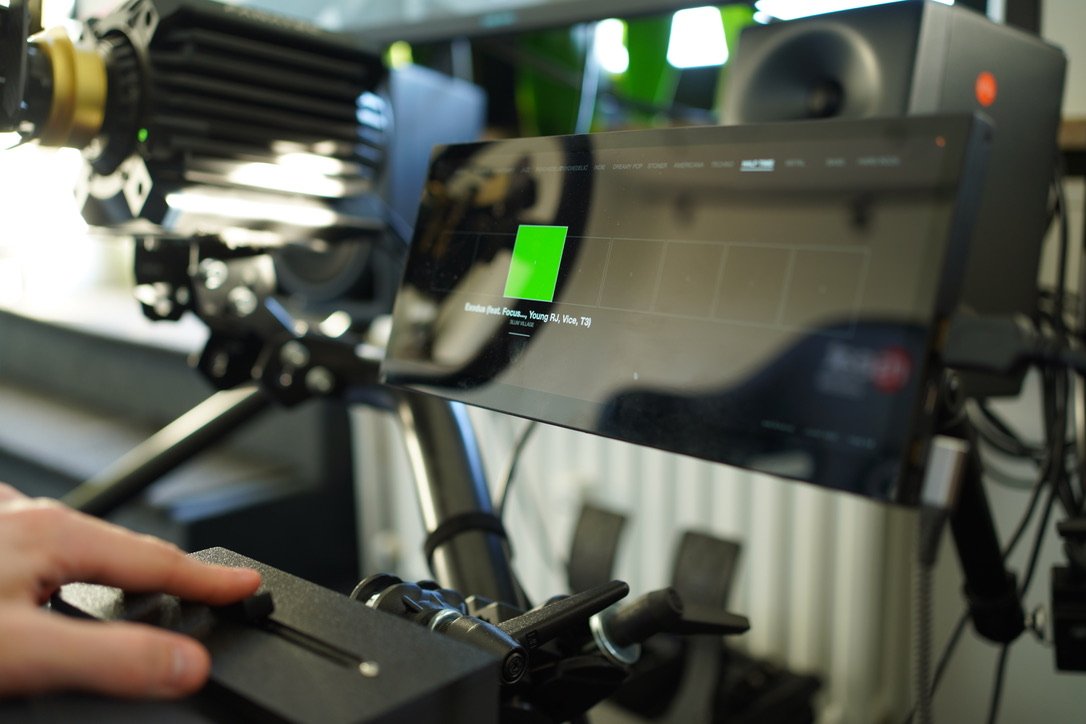
I tested the prototype in a driving simulator with participants’ own music libraries.
The goal was to see whether audio-haptic browsing still made sense while driving, and where it created clarity or distraction. Participants tested the prototype in both low-load and high-load driving scenarios to see how the interaction changed under different levels of attention.
Low cognitive load setup
High cognitive load setup
Final Iteration